Tuesday, October 22, 2024

Slovenia day 3

 Last full day in Slovenia! We drove to Ljubljana to do the half marathon. I had previously done a half marathon the week prior with a time of 1:41. Since I had done a hike the day before I was expecting to get a much slower time. However, I was motivated by my desire to beat my American friend so I persevered. I ended up getting the same exact time 1:41. Unfortunately Martin got an even better time of 1:38. I guess I'll have to beat him at the next race. We ended the day with some local Slovenian food and a bike ride around the city. Good day! I feel refreshed enough to get back to work in the Netherlands. 


Ljubljana

Saturday, October 19, 2024

Slovenia day 2

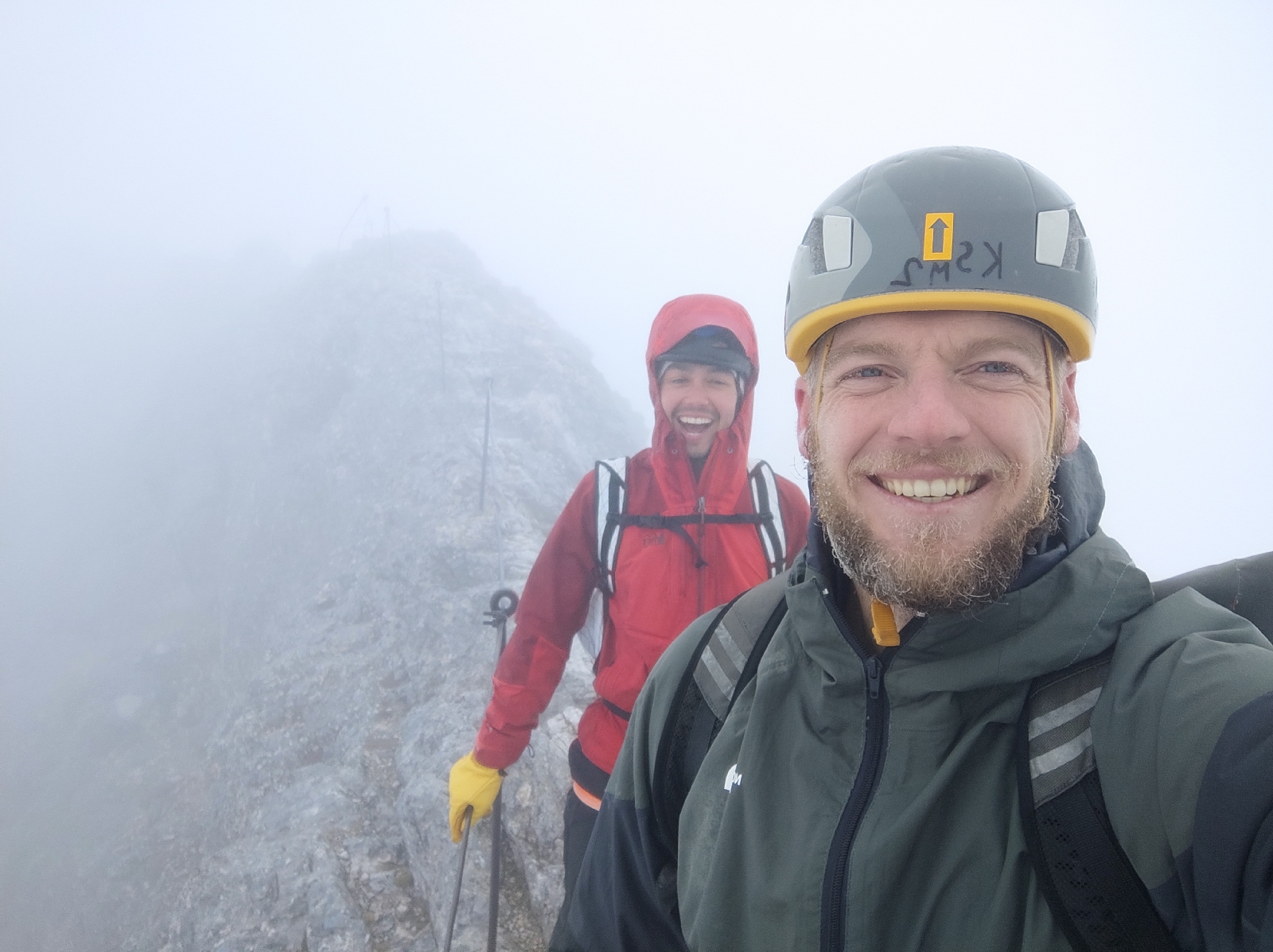
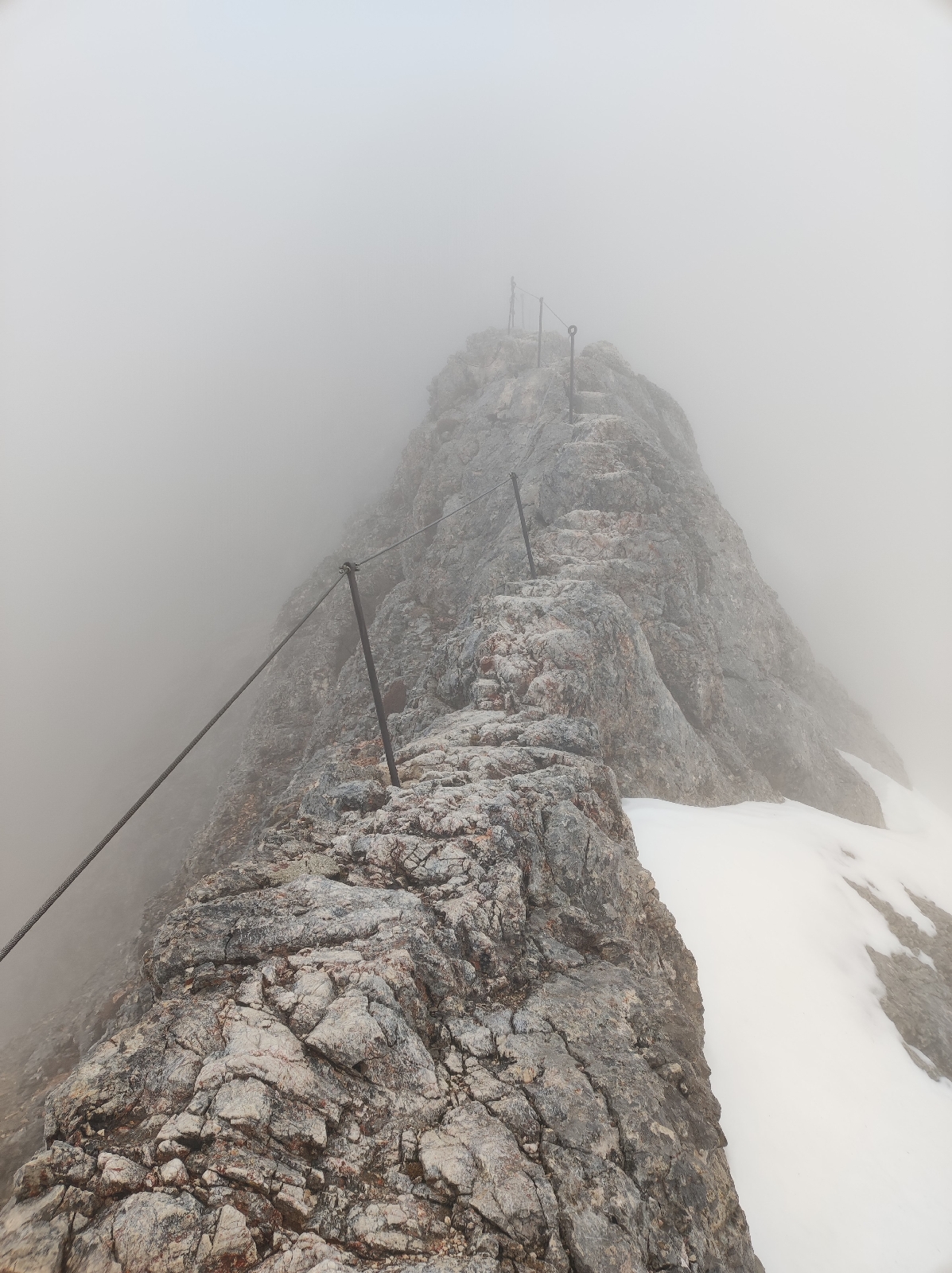
We rented a via Ferrara set and immediately headed out to the start of the mountain to submit Triglav. Lisa damaged her ankle about a month ago so was unable to join us; she stayed in the van and learned German and did other hobbies instead. The hike was incredible. We were in a cloud the entire time so the visibility was limited, but it was still very arduous. It wasn't scary but there were a few narrow ledges which were quite fun. One we got back to the van we ate dinner and drove our way back to Ljubljana to prep for the marathon tomorrow.

Slovenia day 1

Wow it's been a long time since I've written on this blog. So much has happened. So many holidays not recorded, so much about my job at TU/e left untold, my future plans in the Netherlands, and my breakup with Karen. All of that should be probably be written here. But, my blog, my rules.

Day 1
I'm travelling to Slovenia to meet up with Martin and Lisa. We're going to do a via Ferrara hike and a half marathon. I began by flying into Croatia and catching a flixbus from Zagreb to Ljubljana. The reason for this is because it was much cheaper to fly into a neighbouring country - stay classy Europe. I met up with Martin and Lisa in the evening at the bus station and we immediately drove in their campervan to the start of the mountain. We finished the day eating some food and sleeping in the campervan.

Sunday, March 12, 2023

Finland trip holiday 2023

 Here's a 'mostly' Chat GPT written blog of my Finland trip:

Last week, I went on a holiday to Finland with my girlfriend Karen, and our friends Megan and Yeshveen. We had a packed schedule with lots of fun activities planned. Here's a rundown of what we got up to.

Day 1: We took a flight from Amsterdam to Helsinki and then a connecting flight to Rovenemi. Once we arrived, we went to Nillis restaurant and tried some traditional Finnish food, including bear, reindeer, and salmon. We also had a delicious dessert made with squeaky cheese and cinnamon custard. This experience was outstanding and a welcome change from bitterballen and herring.

Day 2: In a futile attempt to avoid going into debt we purchased some budget cereal and milk for breakfast. We walked around Rovenemi city and stumbled upon a family ice fishing. The encounter was lovely, and I'm happy to say that the stereotype of very unwelcoming, quiet, and direct Finish people is very untrue. They told us that they expected to manually drill about 100 holes in the ice until they found an area with some fish. We then took a bus to Arctic Snow Hotel where we stayed in an ice hotel with engraved ice sculptures, an ice bar, and an ice restaurant. We also fed some reindeer and went sledding. Yeshveen and I enjoyed a sauna in the evening and rolled around in the snow every 20 minutes. 

Day 3: I woke up with my face glued to the ice mattress. After the right-hand side of my body had thawed, I had an all-you-can-eat buffet for breakfast. We then went on a snowshoeing tour. This was a simple and slow-paced march through thick snow. It was a lot of fun going off track and plunging yourself into the white abyss. Halfway through we stopped by a fire to enjoy some Finnish sausages. Later in the day, we went to the ice restaurant and had a gin-based soda called "long drink." It's delicious and is a very popular drink in Finland.  While drinking in the heated bar we also played a game called Connect 4. I developed an unhealthy addiction to the game and got quite competitive. Later in the evening Yesh and I went to the sauna where we socialized with a bunch of other tourists. We spent the evening in the artificial igloos. They had a glass ceiling installed so that you can view the aurora borealis from the comfort of your heated bedroom. Sadly, we didn't see any sign of the North Lights. 

Day 4: After another all-you-can-eat buffet, we took a bus back to Rovenemi city center and went husky sledding with five dogs per sled.  I was amazed at how the same breed of dog can have so much variety in personality. One dog kept digging in the snow at every opportunity. One would always roll in the snow. And one would always sing (howl) at the top of his voice. We also went snowmobiling in the evening and had dinner at a Vietnamese restaurant. It was cheaper and we wanted some spice to clear our frozen nostrils

Day 5: We took a morning flight to Helsinki and stayed in a hotel that was once a prison. We explored the city and had some multicultural food at Cafe Bar 9, including stir-fry and pasta. It was so delicious we decided to have pizza for dinner at another restaurant.

Day 6: We took a ferry to Suomenlinna, a military island. This island has a rich history. It was mostly funded by the French, fortified by the Swedish, invaded and conquered by the Russians, and reconquered by the British & French, and finally taken over by the Finish. The island itself was quite boring and unimportant. It featured little more than overgrown tunnels and decaying cannons.  

Day 7: Karen, Yeshveen, and Megan toured the aquarium while I headed south to the seaside restaurant and sauna called Loylys. There were three types of saunas available: a private sauna, and traditional sauna, and a 'smokey sauna'.  The Smokey sauna was a 2-story wooden house that used wood instead of coals which created a nice aroma and gave a pleasant pins and-needles feeling whenever water was added to the logs. The walls had been stained black from overuse and there was plenty of socializing. The demographic was about 60% tourists and 40% locals. It turns out that the etiquette of not talking in the sauna is a blatant lie. The Fins love to talk. Loylys was located right by the ocean so every 20 minutes I would go out and dive into the ice-littered waters to cool down. In the evening we had Indian food. 

Day 8: Megan, Yeshveen, and Karen wanted an easy day today so I ventured out by myself in the snow. I stumbled upon a library that featured 20 chess tables. Anyone can just show up and play. I beat 4 Finnish guys before I got destroyed by the same Russian guy 3 times in a row. It was a really nice experience.

Day 9: We took a flight back to Amsterdam, ending our amazing and expensive trip.

Overall, our trip to Finland was packed with fun activities, delicious food, and unique experiences. We enjoyed trying traditional Finnish food, such as reindeer and squeaky cheese with cinnamon custard, and had a blast sledding, snowmobiling, and snowshoeing. The private saunas and Loylys were definitely highlights of the trip. It was a great adventure. The only downside was the cost. Future trips will be made in Eastern Europe :)


Monday, May 23, 2022

Career path

 So, this is awkward. After 6 years of University level education, 4 years of industry & academic work in Australasia, and 2 years working my 'dream job' at ASML, I've decided it might be time to make a giant career switch. 


Brief Background:

When I first joined ASML my architect mentor mentioned to me that the first 6 months are the 'honeymoon' period. It's where you spend your initial time just learning as much as you can about the company without any pressure to contribute. He was right. The first 6 months of ASML were fantastic. I learned a lot about the company and the machines, and as a bonus, I actually contributed quite a bit. I got to work on really well-defined theoretical tasks that I think I performed very well at. Sadly, reality hit pretty hard after that. The nature of my work changed pretty abruptly. It turns out that real engineering tasks aren't all well-defined theoretical tasks. Most of them are poorly defined, higher-level design decisions that require common sense, communication skills, and the ability to learn top-down rapidly. This is my kryptonite. I like well-defined nitty-gritty tasks that require a lot of maths, and most importantly, a bottom-up understanding (building on an idea from the fundamentals). A catalyst to this was the lack of learning material; if you're stuck on something at University, you can always go to the textbook or YouTube to learn it. But in the real world - which is a messy place filled with incomplete documentation - the only way to clear doubts about how a machine/part works is to ask a colleague/s. What do you do after you've asked your colleague 5 times already? What do you do if the colleague knows less theory than you and can only explain a concept in a flawed way? What do you do if the task is undefined? The answer is iteration, determination, a positive attitude, and an ability to rapidly learn incomplete parts of a picture top-down. I cannot do the last part. It's not in my DNA. And any small shred of ability I have to learn top-down rapidly has been successfully stamped out by my years in academia.

This failure wouldn't bother me as much as it does if I didn't feel like I was the only person on the planet with this problem. When I ask my other colleagues about the mismatch between Engineering at University and Engineering in the real world, they often shrug it off. The typical answer sounds like "Yeah, it's a bit different I guess. But University was still useful in teaching me how to think analytically or what jargon is used". I cannot comprehend this answer. To them, the difference is a small puddle to jump over. To me, it's an ocean - and I'm drowning in it. "Think analytically" !?! I was thinking as analytically now as I was back in high school. "Know Jargon"?? You can learn all the jargon you need within a single week. You don't need 6 years of learning moments of inertia, euler bernoili beam theory, nonlinear differential equations, von mises stress formulas, and so much more just to 'think analytically'. In some sense, I feel like my University has betrayed me in how poorly its prepared me for the real world. It's as if I'd been swindled or robbed. 

Imagine you did a degree in French literature, and upon graduating you get your dream job at FrenchLiterature Incorperated. Then, within the first 6 months, you're handed a harness, climbing shoes, rope, and a chalk bag, and are politely asked to ascend boulders for the rest of your career. With a baffled expression on your face, you begin climbing the boulder, only to realize you're a really shit climber. All of your years studying French literature have left you with very weak upper body strength. After failing to ascend more than 2 meters, you look around in disbelief as you see your other French literature colleagues summit Everest with ease. Stunned, you ask your other colleagues for clarity. Your colleagues shrug their shoulders and say "yeah, well, when you study French literature, you were writing with your right hand - the same right hand you use to climb with - so it's not so different". 

And so here I am, sliding down the corporate ladder looking at what other adjacent ladders are within reach. 

Friday, December 31, 2021

I'm not just sure, I'm Covid positive

 I got tested positive for covid on the 29th December 2021. I almost made it to the end of the year...

This was a huge surprise to me because while traveling around Ireland and the UK I took a total of 2 PCR tests, 2 official antigen tests, and 4 lateral flow self-tests. All negative. While I almost certainly picked up the virus in London (read my previous post about England's approach to Covid), I only developed really noticeable symptoms on the evening I arrived back in the Netherlands on the 26th. This is my story:

The symptoms on the 26th were quite mild in the evening. I had a slightly sore throat and a slightly runny nose. 

On the 27th I still had mild symptoms, but my throat was beginning to hurt more. When going to bed I felt unusually cold for about 15 minutes despite wearing multiple layers and cuddling my portable hot water bottle (Winry). 

On the 28th all symptoms remained mild except for my throat. It was really starting to hurt now. When going to bed I could feel my windpipe swelling up, making it uncomfortable to breathe. 

I tried to sleep it off but at 3am, on the morning of the 29th, I woke up finding it much harder to breathe. My throat was very narrow and mucus was blocking the rest. I tried to swallow a small cold & coughing tablet which should have reduced the mucus that was obstructing my windpipe. Predictably, the tiny pill got stuck in my throat. Whoops. Despite this, I could still breathe fine - albeit uncomfortably. However, worried at the rate my throat was closing up, I thought it would be a mistake to wait another 5 hours to visit my GP. I woke Kaz up and told her to drive me to the hospital. The wait at the emergency entrance was long and arduous. While talking in a high-pitched voice, I had to tell the receptionist everything: symptoms, address, BSN, health insurance numbers, ID etc. She eventually let me through with a warning: "next time make an appointment to go to the emergency, the doctor is very annoyed with you".  The doctor managed to solve my throat issue by feeding me a crushed-up ibuprofen pill with water. No dramatic emergency throat slicing needed. He told me my symptoms were consistent with that of Omicron and that self-tests are very insensitive to the new variant. Kaz and I both did a PCR test that morning and we both did self-tests. We both tested negative on the self-tests and Kaz got a negative for the PCR test. My PCR test wouldn't come back positive until the late afternoon of the 30th. 


Tuesday, December 28, 2021

England 2021

Ireland done. next stop, England. 

Day 1: 

We arrived at Heathrow airport and were greeted with a clusterfuck of bureaucracy. Firstly, the 2 PCR tests we had booked (in Ireland and in London) weren't checked. Neither was our passenger locator form. Secondly, after waiting for 2 hours for our bags to arrive, we finally found them on separate baggage carousels! Then, lastly, we had to catch a black cab to the COVID testing site because we were running late. The clinic had highly untrained personnel (my swab barely touched my nose). The taxi driver, who was not wearing a mask, vented to us about how COVID kills fewer people than the flu and that it's destroying the economy. He was extremely critical of card payments and was very open about how much he wanted the PM to die. Admittedly, the cab driver was homeless - he showed us the sleeping bag and gas heater in the back seat before he drove off in a huff. 

With our bad start out of the way, we were ready to start our day. The first thing we noticed was how similar everything looked to Australia. The brick front yards were a dead giveaway. 

When we arrived at Pestana hotel, Kaz was very eager to jump straight into self-isolation without saying hi to my auntie. Unfortunately, this didn't work out because Alex and Clare were there ready to ambush us on our arrival. After our not-so 1.5m hello's we sprinted upstairs and spent the remainder of the day and the following day in isolation. 

Day 2:

Self-isolation sucks, but if you have to endure it, it helps to have a great hotel room. The room, which was partially purchased by my parents and my uncle, was pretty swish. It had a decent view of Battersea Park and had a bathtub with neon lights. 

It struck me as odd that we needed to self isolate ourselves so effectively in London. I could understand self-isolating in New Zealand because you can view the country as a pure, clean Petri dish. But England is more like a messy dog bowl. If anything, the whole country should isolate to protect us.

In the evening, after enough kicking and screaming, Karen allowed me to have dinner with my Aunt and Uncle. Marcus was there too. Clare made an excellent dinner and it was nice catching up with my family. Marcus is a stereotypical British University student. He says "you know what I mean, right?" in every sentence and talks endlessly about his drinking escapades. 

Day 3:

This was our busiest day. We took the Uber boat all the way to London Bridge and walked around. The whole country was completely open. Stores were wide open, people were running, pubs were crowded. It was a big change from the Netherlands. We saw the Tate museum and to my surprise I actually really liked it. I ended up focusing almost none of my attention on the post-modern "artworks" and spent a lot of time admiring a mechanical project. Someone had created giant floating octopuses that were floating in midair with the help of drone propellers. It was very captivating and I couldn't help but figure out how they worked. 

In the evening Daniel Chee and I met up on Mayfair. All 3 of us enjoyed a very British meal consisting of Raman noodles and octopus balls. After that, we walked through the light festival and proceeded to get drunk in a local bar. It was great catching up with Daniel. 

Even in my drunken stooper I couldn't help but notice how much the average Brit doesn't care about COVID. No one wears masks and no one obeys government regulation. It's as if the whole society has become numb to the pandemic after the first hard lockdown.

Day 4:

We spent the largest part of our day recovering from our hangover. I walked a lot around Battersea Park while Kaz capitalized on our amazing hotel quality and read manga on her phone. 

In the evening we went to Wimbledon to meet up with my cousin, Andrew, and his wife Hellen. I really enjoyed meeting up with them. They have a kid called Marius and he's an uncontrollable bundle of energy that's strangely quite shy. I had never had a long conversation with Hellen before (only some quick small talk in Ireland for their wedding 4 years ago). It was very refreshing having a serious, intelligent conversation with them. Andrew was still very vague about his job, but I did find out that he spends at least part of his time contracted out to fight cybercrime against insurance companies. Hellen has an extremely stressful job doing psychology work on attempted suicide victims. To top off the night we went to the pub and drank some hot chocolates and ate some crisps. 

Day 5:

Christmas! Jake and Laura rocked up to Clare and Mark's apartment and we all had a very enjoyable Christmas together. They have a baby called Casper. The conversation was light-hearted and friendly. To top it off we played a board game called Codenames - adult-themed. It was a lot of fun. 

Day 6:
Last day. We met up with Daniel again briefly for another pub feed then sprinted our way around town to get more covid tests + a 2 hour bus to Stansted airport. 

Goodbye England! This was definitely more of a family visit than a country tour, and it was much needed! Stay posh.


Tuesday, December 21, 2021

Ireland 2021

 Kaz and I planned a trip to Ireland and England over Christmas. The itinerary is:

  1. Eindhoven --> Dublin (flight)
  2. Dublin --> Donegal (bus)
  3. Donegal --> Dublin (bus)
  4. Dublin --> London (swim)
  5. London --> Eindhoven (flight)
Originally we had planned to rent a car from Dublin to Donegal. This would have been convenient because it would have allowed us to travel up North where we could access a lot of remote hikes, and also see some of Karen's ancestry. Ultimately, however, we went with the bus option because all rental cars require a credit card: something neither of us has. The bus option turned out to be extremely ideal, not just because it was cheaper and dropped us off exactly by our hotel, but because the small, windy, dimly lit Irish roads would have been very stressful to drive through for 3 hours. This bus ride was a small taste of things to come...

Donegal is extremely rural. The whole town is really sandwiched on the outskirts of a large roundabout. There are 2 supermarkets, 2 hotels, 1 school, 1 castle, and 34 bars. 

Day 1 - Donegal
Unsurprisingly, we spent a lot of the first day jumping into and out of bars drinking Guinness & eating hearty pub food. The food was fantastic; a very welcome change from Dutch bread and cheese. In addition to this, we also toured the abbey. The abbey was nothing more than a pile of overgrown rocks in a graveyard. At one point it was intended to store gunpowder to fight off the British before it exploded. We also saw a graveyard commemorated to all the Irish that died in the famine in the mid-1800's. 

Day 2 - Donegal
This day was a lot less morbid. We took 2 busses to Slieve League - a wonderful hiking region on the west coast. The hike was fantastic. The weather was perfect and it was completely empty as well. I might tactically organize more hikes in Winter. Because the town was so empty, we really got to have long personal conversations with our bus drivers. Fortunately, we had been in Ireland for ~ 24 hours at this point so the Irish were somewhat understandable to us. The bus drivers spoke fluent Gaelic and were very passionate about preserving the language the culture. To finish the day, we had a spa in our hotel and went to a pub for another Irish dinner. 

Overall, I had a really good impression of Donegal. There was a very peaceful vibe and the people are extremely friendly and great talkers. The customer service is outstandingly good (at least compared to the Dutch). The only downside is that the town is so small that there really isn't much to do except drink.

Day 3 - Dublin
After another 3 hour bus ride we arrived in Dublin. Within the first 10 minutes I was greeted by a giant Guinness truck zooming past, and the stench of weed in the air from some teenagers smoking in broad daylight. Later on, I walked around the city and noticed thousands of people crammed shoulder to shoulder attempting to do last-minute Christmas shopping. Everyone was quite vigilant about wearing their mask and using hand sanitizer but seemed completely sanguine about crawling over each other to buy some jewelry or a board game. Despite this, it was nice to see such liveliness. There's a very young, artsy vibe in Dublin which can be seen everywhere. 

Day 4 - Dublin
We walked to the Kilmainham Gaol (pronounced "jail" (and also means "jail")). While walking there, we passed a bunch of crack heads. These were a group of people (probably homeless) that were openly smoking crack cocaine at 8am in broad daylight in the middle of Dublin. It was creepy to see how low a human life can go. Once we arrived at the Gaol we were lucky enough to squeeze into a tour. The tour guide was excellent. He walked through a lot of things but there were a few main takeaways: 1) The jail flip-flopped from Irish to British control several times, 2) It housed the main leaders from the IRA that staged the 1916 revolt against the British. They all got executed in the end. And 3) During the famine in the mid 1800's, the gaol became flooded (x12 capacity) with people. This was partially because the jail had the obligation to feed its prisoners, and people who were on the verge of starvation would deliberately commit crimes to get fed. Kaz was fed up from walking after the tour so we took an overcrowded tram back to the city center to rest up at our hotel. In the evening we went out for pub food again and made friends with some Irish women in their 50's. They were extremely nice but very critical of Americans. Kaz resisted the urge to correct them. 

Day 5 - Dublin
We went to Trinity College. Kaz went to the book of kells museum. I want to the archeology museum. No regrets. The museum was great. There was detailed evidence about Irish history. You got to see how Irish culture and art changed as they were influenced by the Romans in the period between 100AD - 400AD, the Vikings in the 800's - 1000's, and the British in the 1300's onwards. I found myself most interested in Viking history in Ireland. Over 200 years, the Vikings had slowly merged with the Irish despite frequent battles. The Irish started using coins thanks to the Vikings and changed their art and language. I liked this history because it begs important philosophical questions. Obviously, from the perspective of the Irish that were first invaded by the Vikings, our moral intuitions are tuned to think this is an unspeakable moral tragedy. But when you zoom out to the perspective of centuries (rather than months or years) things become much more gray. Was Ireland better off being enriched by the culture and technology of its invaders in the long term? What is the best definition of Irish culture on this time scale and is it something worth preserving?

Overall I liked Dublin a lot. It's messy, chaotic, lively, and friendly. I don't think I could live in Dublin, but I could certainly visit again. 

Tuesday, August 24, 2021

Poland trip days 1-5

Following an easing of covid restrictions I made plans to travel to Poland and Spain for a 2 week holiday. 

Poland day 1:
Now that I've officially learned 7 Dutch words, I decided to live up to my newfound heritage by bike riding to the airport. My flight departed at 5:45 p.m. and I arrived in Krakow in the late evening. My German friend, Basti, who lives very close to Poland in the East part of Germany, arrived shortly after me from a 15 hour bus ride. We immediately noticed a outdoor festival and purchased some good Spanish food and wine. Since it was already pretty late we decided to go to a 24-hour grocery store and go to our shitty hostel to stay the night. 

Poland day 2:
All prior attempts to book a direct bus to the tatras mountain range had failed due to errors on their website. So we decided to ambush the bus driver at one of the stops and see if we could hop on. Once successful we were on our way for a 2-hour drive. The hike was outstanding. It was mostly uphill and we got a great view of two lakes by the famous hut Morskie Oko. While hiking uphill we saw lots of polish people coming up and down the mountain. I noticed that most of the polish men are extremely fat and ugly whereas most of the polish woman are incredibly thin and coated with makeup. It was also interesting to see how much gender stereotypes affect polish couples. The women would often seek to be guided and supported by their male partners and walk extremely cautiously and slowly. I wonder if this has something to do with Poland's strong orthodox Christian roots. After a few mishaps (including me almost losing my one water bottle at the peak of the mountain) we successfully arrived at our hut. My friend and I enjoyed a large beer and a traditional polish dinner and then went to sleep shortly afterwards.

Poland day 3:
This day was by far the hardest. Rain had pounded the mountain all night and had no intention of stopping throughout the day. Within only a few hours my "waterproof" jacket had absorbed a small swimming pools worth of rainwater which had fully soaked all of my clothes and food. This was also the longest hike we were planning to do: about 20km. There were lots of ups and downs, slippery rocks, and overgrown paths. Regardless we persevered and made our way to the second hut in about 12 hours. We were so physically exhausted and mentally drained from talking to each other for several hours that we decided to veg out and play computer games on our phones for an hour or so.

Poland day 4:
The rain was still going strong today but that made no difference to us because our clothes were already soaked in water. Fortunately the hike was only 9 km long and mostly downhill. We arrived in Zakopane and immediately paid for a taxi to drop us off at our hotel. The first thing we did on arrival is dropp down our water soaked bags and make our way to the nearest thermal pool spa facility. We spent almost 4 hours there just sitting in the nice warm traditional polish sauna. 

Poland day 5:
This was our last full day in Poland and we spent most of it in the restaurant of our hotel enjoying the benefits of a free buffet breakfast. Once our carb levels had returned to their pre-hike equilibrium we tried to take public transport back to Krakow. This proved way harder than expected because the bus services in Poland are horrible. We missed the first bus because a guy in front of us asked the bus driver if it went to some obscure destination. On discovery that it didn't he left in a huff. The bus driver assumed we were with the other guy and drove off. We missed the second bus for a similar reason. On the third attempt we bulldozed our way in, shouldering our way in front of elderly person in queue. Once back in Krakow, we toured the city center one final time. I'd had enough goulash to last a lifetime, so we settled on some greasy burgers to finish our journey


Sunday, April 11, 2021

Luxembourg trip

Day 1: 6th April


Kaz and I set off to Luxembourg for a much needed holiday. Luxembourg was the country of choice purely because of it's stance on Covid; it didn't have one. However, to drive to Luxembourg we needed to go through Germany or Belgium. If Luxembourg can be personified as a hippy preaching for free entry everywhere, Belgium and Germany can be viewed as bouncers to a fancy nightclub. Just to be on the safe side, I did my research, filled out the forms, and got tested for Covid. All of it turned out to be unnecessary in the end because there was no border patrol whatsoever. What was even more surprising is that there were hundreds of cars every second zipping across the border. It was pretty disheartening to see all of the isolation efforts by my friends be made almost completely redundant within a second. 


Three hours and one parking ticket later we were in Luxembourg. Even though the whole country is tiny, and even though there is a national language (it's called Luxembourgish, and yeah, I thought it sounded made up too), the dialect is noticeably different from region to region. As you get closer to the west it sounds more French, and as you get closer to the east it sounds more German. The houses are also very strange. Unlike the Netherlands, which consists of row after row of identical looking houses, Luxembourg has brightly colored houses popping out of the ground in all types of weird places and orientations. It looks like a child got frustrated placing in those rectangular leggo pieces and resorted to hammering them in instead. 


We arrived at our remotely located hotel and immediately decided to do a hike. It was only a 2 hour hike, but still very rewarding. 


Day 2: 7th April


We woke up at 7am to have breakfast and start our hike for the day. We ended up hiking to Echternach via some of the famous caves. It was lovely. Once we arrived, it started to snow down heavily so we decided to take cover in a restaurant by a lake. Luckily, today was the first day that restaurants and cafes were allowed to open. Unluckily, Covid restrictions still forced us to sit in the outdoor area. After the cold snap, Kaz and I decided to pack it in early and take a bus back to our hotel. We enjoyed a lovely hot tub, some Chinese food and got to bed early. 


Day 3: 8th April


We had a very lazy start to the day. We woke up late, enjoyed our free breakfast and drove to a castle in Bedorf. The castle was just like any other except for the torture area. There was a whole assortment of pully systems, cranks and spikes all used in creative ways to crush fingers, dislocate shoulders and severe tendons. It's crazy to think how unempathetic these people were. After the sobering visit to the castle, Kaz and I took a walk around the park, disconnected from reality for a while by catching pokemon, and checked into our new accommodation - a place in a prime location for additional hikes. We had a long conversation with the owner of the hotel who said that the hotel had been pretty much unused for the last 2 years. In 2018 they had a flood, and right after they did the renovations Covid hit in full force. The owner tried to hide her bitterness that the Luxembourg Government hadn't given her any support money due to the pandemic. 


In the evening Megan and Yesh, 2 of our South African friends finally arrived and we settled in for some more Chinese and drinking.


Day 4: 9th April


This was our big hiking day! We walked a full 20km around mostly Mullerthal trail 2. It was stunning. We passed the famous caves which got super narrow and pitch black. A very rewarding treat. After that we ordered in some Italian food, played Settlers of Catan and drank some more alcohol.


Day 5: 10th April


My birthday was delightful. My parents went through the effort of ordering Champaign and a snack platter for Kaz, Megan, Yesh and I. Kaz gave me a Strava subscription for a year along with some NASA fanboy gear. Megan & Yesh gave me a triathlon belt. The weather was not so rewarding so we decided not to hike today and tour Luxembourg city. However, due to a rapid series of fuckups, we ended up driving there in double the time of public transport (which is free, by the way), and with a speeding fine. Regardless the city was beautiful. There were lots of old forts and castles scattered throughout the center due to its history of being a punching bag between France and Spain.


Friday, August 7, 2020

Bulgaria hiking trip

 2 friends and I booked flights to Bulgaria to go hiking around Rila national park. We arrived in Sofia, the capital on the 31st of July, and immediately made our way to Borovits, a nearby skiing town. Borovits was a strange experience. It was hard to distinguish what was Bulgarian culture and what was clearly a touristy gimmick. British flags were attached to the front door of almost all restaurants, and English breakfasts were on almost every menu. Clearly, Brits must enjoy using Bulgaria as a cheap ski haven. 

In the morning we began our hike and made our way to Mt Musala - the highest point in Bulgaria. The hike was long, uphill, and exhausting: everything I've been longing for. When we arrived at our hut near the summit we met about 40 Czech people who were also staying there. They were super friendly, spoke excellent English, and drank crazy amounts of alcohol. I met a 70-year-old man who couldn't withstand bringing up the evils of communism at almost every opportunity. He told me about the difficulties of living in the Czech Republic 60's and 70's. The country was extremely poor and all the students were forced to learn Russian. 

The 2nd day of hiking was the hardest. A quick glance of the map had fooled us into thinking that Mt Musala to Ribini Erzo hut would be a simple hike along the ridgeline of the mountains. This was an underestimate. It was a long and challenging hike. Martin got altitude sickness, Victor got some severe blisters on his feet, and we all walked into a pack of ultra-aggressive dogs defending a group of cattle that had waddled their way onto our walking track. At one point I picked up a large rock to prepare for the worst. Don't worry though, we lived and no animals were hurt.

The 3rd day was by far the easiest. We hiked to Rila monastery - an extremely famous destination. I had no idea how big of a deal the monastery was until I arrived there. The religious paintings were amazing, they had nuns and priests doing religious ceremonies, and there were hundreds of pilgrims staying there. 

On the last day we hiked from Rila monastery to the famous 7 lakes. Confusingly, there were many more than 7, but that didn't take away from the moment. Victor unpacked his drone and got some jaw-dropping footage.

On our last full day, we traveled back to Sofia. We found an amazing Bulgarian restaurant. For 17 euros each we got to try some of the best meat I've ever tried with a full bottle of wine. It turns our the Bulgarian diet is almost exclusively meat-based; there were hardly any vegetables, just mouth-watering lamb, chicken, pork and beef with a heavy side of Avjar (a delicious tomato and capsicum paste).

The trip was great fun and a much-needed refresher. I'll be back soon, eastern Europe :)


Wednesday, June 24, 2020

Internet and democracy

There is a lot I want to say about this topic. This is just a taste test.

I remember when I watched curiosity, a NASA rover, land on Mars in 2012. I thought it was so cool that a machine built by fleshy humans was blasted from one tiny planet to another tiny planet. In my mind it was the perfect example of how humanity had adjusted it's focus, zooming out to see the infinitely complex and beautiful universe around us. That feeling was short lived. Shortly after the touch down was declared a success, a NASA employee was the focus of every news channel, YouTube video and Facebook post I could find. He had worn an inappropriate shirt with pictures of sexy women on it during an interview and was being accused of sexism. I don't remember all the details, but I do remember it devolving into a controversial issue, which generated & spread a lot of emotion around the internet. I remember feeling so disheartened that humanity had instantly snapped back to it's zoomed in view of the world. I also wondered whether the future would be any different.

Well here we are, 2020, literally 1 month until the launch of the next NASA rover, Perseverance. There are so many things to be excited about. For starters, this next mission will involve a land rover and a tiny helicopter called ingenuity. This is amazing! A helicopter flying on another planet that has almost no atmosphere! Yet a part of me is already disheartened. I'm bracing for the moment when humanity misses another chance to wake up and really open it's eyes. We're all so zoomed in. I see increasingly more of my friends take to social media to scream into a virtual whirlwind. We're all so opinionated about controversial moral subjects that have relatively negligible moral importance. There's a viscous part of 21st century technology that plays with our primitive psychology, perpetually distracting and polarizing us.

I'm bracing myself for the emotional shock of witnessing Ingenuity starting spinning it's blades for the first time, only for me to notice in my periphery that the following 15 recommended videos are about the TV host not being black.

Saturday, June 13, 2020

New philosophy website: https://sites.google.com/view/mattsphilosophy/home

It's not complete:

https://sites.google.com/view/mattsphilosophy/home

Sunday, April 12, 2020

Day 1

When it started it was loud. In every direction your senses were flooded with the deafening sound of people screaming and sirens bellowing. But as the virus spread it got quieter. Only the occasional faint crack of a gunshot in the distance could be heard. Now everything is completely silent. Even the wind dares not disturb the silence as it brushes its way over the thousands of corpses that litter the streets. My name is Matthew James, and this is how I survived the C19 apocalypse.

In the old word I was nothing special. I had an Engineering degree, a girlfriend, and a pet dog called Winry. I, like everyone else at that time, had been indoctrinated into the romantic view that a successful life was guaranteed provided you worked hard, had a fulfilling social life, and brushed your teeth twice per day. I was completely unprepared. When the first few people got sick, everyone cared so much. Scores of people would care around the clock for these people - there would be hugging, kissing, crying and laughter. Emotion is a luxury of the privileged, I guess. Little did these people know that their 'humanity' would only cause the virus to spread more. It spread so fast that by the time it was properly noticed, it was too late. I survived the initial wave of infections, not because I was prepared, but because of luck. I had spent the last few months cocooned in my bedroom playing game after game of Age of Empires, completely unaware of the events unfolding around me. Isn't it ironic that someone can be so distracted by creating a fictional empire, that they fail to even notice real empires beginning to crumble around them.  When I finally left my house to get more corn flakes and milk, the world I stepped into had already been scorched. It was at this moment I realized that I needed to uninstall the game and get supplies...

Wednesday, December 4, 2019

Problems with utilitarianism

Sam Harris, a hero of mine, argues that maximising well being is objectively moral. While I don't fully agree with this, in the sense that it's objectively true, I've previously said that humanity should DEFINE maximising well being as a fundamental value.

But I forsee problems with this form of utilitarianism. In fact, I can forsee 4 problems:

1) The genocide problem
2) The altering of our genome probem
3) The drug paradise problem
4) The scaling problem
5) The measurement problem

perhaps no need for a strict definition? Arfitical learning

1)
What if maximising well being is most easily and reliably accomplished by painlessly murdering depressed people? This would push the average up. Why not kill every human on the planet except for the happiest, most well tallented one? Assuming that the last person on earth would somehow be unaffected, then won't this maximise well being? Perhaps you could wiggle your way out of this by maximising total wellbeing instead of average wellbeing - where wellbeing can only be measured as a positive value (just like degrees kelvin). Or perhaps you could resovle it by applying a few constraints to the optimization problem. But, then we're getting to a point where these additional rules are starting to feel arbitrary. If we start to patch up a rule such that it's inline with our moral intuition, then you might as well avoid the rule alltogehter.

2 & 3)
With advances in technologies like CRISPR, perhaps it may be possilbe one day to design our bodies such that we feel unparalleled bliss, no matter what we do. Maybe it might also be possible to design a side effect free drug which makes us feel unparalleled bliss. If this were the case, then we could all live completely isolated, unacomplished lives and still feel overwhelming happy. By our definition of moral, does this mean that this is a good thing? Ambiguity in the term "wellbeing" is now significant. Perhaps we could tighten the definition of wellbeing in such a way that it incorporates human connection, getting a job etc etc. But this is starting to feel arbitrary once again. Perhaps a drug induced bliss is reaching maximum wellbeing, and maybe I've just developed some misleading intuitions because of my anti-drug upbringing. I'm unsure.

4)
Do we just want to maximise the wellbeing of humans? Surely Apes and Chimps feel suffereing, so they should be incorperated into the equation somehow. What about ants and mosquitos? I previously thought you could solve this by applying a weighted sum of wellbeing. So since ants (presumably) don't experience a wide spectrum of suffereing / joy, we won't need to care too much about an ant verses the wellbeing of a dog for example. But what if we're wrong about the nature of experience of ants? Or what if the trillions of ants collectively still have a large influcne on the total or averaged wellbeing?  Likewise, would it be a good idea to force mosquitos into extinction, even under the assumption that there are adverse affects regarding the food chain etc? If so, why would the 'no genocide constraint' be applied to humans, but not mosquitos? These are all highly theoretical considerations. On a practical level, it would be naive to think that human bais's won't leak into this equation somewhere. Humans value the life of a dog, far more than that of a dung beatle because we've evolved to feel empathy / compassion for mamals that have morally irrelevant features: cute ears, wide eyes etc.

5)
Lastly, and most obviously, how do we precisely measure wellbeing? Even if neuroscience develops to the point that we can understand subjective experience at the level of individual neurons, we will still need to rigerously define what outputs we desire. For example, even if we know deterministically that chemical A used on a patient causes output B, how do we convert that to a wellbeing score? A definition will still need to be made, and it can only be informed by our biology, not determined by it. But maybe I'm being too harsh. After all, the original definition of temperature was amazingly crude - it was defined as the volume of mercury in a glass tube. Then as more theoretical models were made which were informed by data, the definition of temperature changed to one that was more precise. Perhaps the lesson learned here is that a crude definition of wellbeing is ok to begin with. Maybe a definition of wellbeing could initially be "everyone should have enough food to eat proportional to each beings body size". Then, as a socieity grows and gets more complex, theoretical models involving wellbeing could be made which could help inform new refinements to the definition. Perhaps iteration is the key?

All in all, i'm still very confused. I'm convinced I live on a small spinning rock, hurtling though space, where nothing really matters. Maybe trying to force order out of pure indifference is a fools errand. Maybe I should only define what's moral for myself? I'm not sure.

Thursday, November 7, 2019

Suspension of belief 2

I've talked briefly about suspension of belief before. In it, I briefly argued that the confidence of a belief should be roughly proportional to the evidence you have to support that belief. I thought I'd flesh that idea out a bit more:

1) Let's say you have a hypothesis about the world, H (example: H = spiders have 8 legs)
2) Let's say you experiment and find n data points (you find n = 300 spiders and count their legs)
3) Then the confidence you can have that H is true should increase with more data. It will always approach, but never reach 100% (because even after finding 99999999999 spiders, it's always possible that the next spider could have 7 legs).

I suspect this is what the graph should look like:


I'm sure statisticians can flesh this idea out more, but the essence is here. Notice, when you have no data, you should have no confidence in your belief - this is what I would call suspension of belief. So far this seems pretty simple, but wait for it becasue it gets contravercial.

Some atheists argue that they believe God doesn't exist because there is no evidence to prove his existance. I think this is a mistake - without evidence you should suspend judgement entirely and be completely impartial as to whether a God exists or not. It should go without saying I'm refering to a generic diety, not the Christian God which supposedly affects the world (ie something we can observe to be true or not).

But what about Bertrand Russell's tea pot? Our technology can't conclusively prove there isn't a tea pot orbiting around Mars.  In the absence of data, should we still suspend opinion? Of course not. The analogy is flawed. Intuitively, we all know that tea pots are made of ceramics which require careful manufacturing on Earth, so we actually do have some data! 

To throw confusion into the mix, consider two addititional ideas. 1) occam's razor: the claim that the the simplist idea is likely the correct one, and 2) The person making a claim has the peronal responsibility to back up that claim. I disagree with idea 1) because some things whcih are true are extreemly complicated. Is it simpler to believe the ISS is held into orbit using a giant thin rope? Nonetheless I agree that most true ideas seem simple, but I believe this is only the case because most phenomina with large data sets appear simple (ie sun rising every day). The other idea 2) seems wrong to me as well. I concede that this is a good rule of thumb in a practical sense; after all, if your flatmate claims that the broken sink was caused by polar bears, you would hope he backs it up before you need to call the plummer. But from a strict rational point of view, the Universe doesn't care about personal responsibility - so if you care about truth, you should want to find as much data as you can to prove any hypothesis true/fase. Obviously humans are not timeless truth seeking machines though, so at some point we should stop looking for evidence of polar bears to focus on other more pressing matters. 

What about mathematics? Mathematics doesn't require data, right? Wrong! It requires the most amount of data, and it gets it in an entirely different way! Consider the derivation for the quadratic formula: x = -b +- sqrt(b^2-4ac)/2a. This formula has been derived with generic variables (a, b, c). The reason we know this proof is correct is because the variables could be (1,1,1) or (1,1,2) or (1,1,3) etc etc. We've effectively observed an infinite number of data points for which this formula will work! This means on our graph above, we actually reach 100%.  Now at a very deep level, it's not actually at 100% because there will always be some uncertainty in whether we've done the algebra correctly. Likewise, how can we really know the axioms of mathematics are true (A = A, 1+1 =2 etc)? Some people have tried to prove some of these things using set theory, but how do we know the axioms of set theory hold? The rabbit hold must go on forever or intersect itself - both are problems for the rationalists. I suspect that even the most fundamental statements (1+1=2, A=A, "I think therefore I am" etc) all fundamentally depend on observation. This makes the shining beacon of mathematics fall in the unclean realm of observational science. 

A few additional things I wanted to say are about AI, and causality. But this post has already gone on for long enough. In short 1) I believe to learn is to generalize, and 2) causality doesn't exist - it's a flawed way to simplfy a complicated phenominon that is a function of many variables. I'll talk about this in a future blog with an example of a spring mass damper.

Wednesday, October 30, 2019

Last day in the Netherlands


For the last 2 years I’ve been studying at TU Delft, Netherlands. Now that I've earned my slip of paper, my time has come to fly back to Australia via Malaysia.

I was expecting the feeling of departing the Netherlands to be much harder than it actually was. I have made a lot of good friends here, adjusted to the bike culture, and have developed a pretty severe addiction to chocolate croissants. But to my surprise, the departure was simple and easy.

Perhaps what made the departure so easy was the interaction I had with a lowlife at the train station on my way to the airport. I was walking through the gate with my luggage, and a guy in his mid 20’s squeezed in right behind me to avoid paying for a ticket. Partially out of surprise, and partially out of a burning sense of injustice, I tried to block the guy by propping up my luggage. It didn’t work though; he simply clambered around me. As he passed me he shouted in a Dutch accent “Why you block me, man?! Next time, I’ll cut you!” and made stabbing gesture. The Dutch really are direct.

My flight was at 8:55am so I had to wake up at 4:50am in order to get me there 2 hours beforehand. I would rather sacrifice an hour of sleep and walk 3km with luggage, than spend 3 euros for a quick and simple tram ride to Delft station.

Netherlands, you've been fantastic. In particular, I love your biking culture and the friendliness of the people - although, this doesn't apply to customer service - you can improve a bit on that front. 

Even though I feel just as unprepared for the industry as when I first entered Delft, I'm slightly optimistic that I can now get a job that will utilize my theoretical knowledge. Watch out world! Here I come! I may stumble, slip and fall, but dammit I'm going to move forward. 

Saturday, October 19, 2019

England day 3

Today I dragged my throbbing head out of bed and into the shower in a futile attempt to null the pain of my hangover. It didn't work.

Shortly afterwards, Mark and I hoppped in the Porche to drive to Bermingham. The weather was forcasted to be horrible, but it turned out to be OK. I pressured Mark to allow me to drive, and he reluctantly agreed. After about 30 minutes of testing the speed limits, I could tell I was making Mark uncomfortable, so I decided to let him drive the rest of the way.

Bermingham was a surprise to me. Based off my Dads stories, I had pictured a beaten down empty city filled with homeless people and closed stores. To my surprise, the heart of Bermingham was busy and vibrant. I visited my Dads university and was quite impressed at how beautiful it looked. I toured the Engineering and Physics department and got to see some of the lecture halls. The small staircases and cramped study areas reminded me of hogwarts from Harry Potter.

Im glad to say that I overheard a proper Bermingham accent while touring the city. It wasn't as pronounced as the accents from the TV show Peaky Blinders, but was still almost incomprehensible.

We also toured my Dads old house and got to see the guarage his Dad had built. It was nice hearing Mark reflecting on his chidhood as we drove around the neighborhood.

We went via Oxford on our way back to London. We got to visit Cathy and Scott and their adorable puppy Milo. Mark also got to show me more of Oxford.

On arriving back in London, we had dinner prepared for us. Marcus also joined in. :)

Friday, October 18, 2019

Germany day 3 and England day 1 & 2

Eeep, getting behind on this blog.

My flight out of Germany (which I purchased for 13 Euros) was in Memmingen. John and I toured the town for a little while, and waddled around the fair.

When I arrived in England, I took a coach from London Stansted airport to Victoria station, and walked all the way to Marks appartment in Chelsea. Claire and Mark had prepared a huge dinner since Laura and Jake decided to come too. It was very interesting to see how the family communicates with each other - it's totally different to my family. Once the subject of Brexit got brought up, the conversation turned turbulent and emotional; similar to how I expect a lower income Italian family would behave. It was interesting, but I couldn't contribute much to the conversation because I was very ignorent of the details of Brexit.

The following day Mark took me on perhaps the worst bike ride of my life around London. There are still no designated bike lanes around London, so we were swerving onto pedestrian lanes, avoiding huge piles of rubbish and stopping frequently to avoid hitting parked cars. We eventually gave up on the bikes and entered a few museums. Mark was kind enough to take me to the science museum, which despite being swarmed by large groups of children, was a pretty educational experience. I was very impressed with Marks knowledge of Engines and WW2 history. It's always a pleasure to talk to Mark about history and machines - it's just important not to derail the conversation to a topic about taxes or unions.

In the evening I met up with Daniel Chee, a friend of mine from highschool. He's been living in the UK for about 2 years now and doing extreemly well. In good ol' British style we had a few too many pints far too quickly.


Tuesday, October 15, 2019

Germany day 2

Today we took a break from driving and decided to turn into a bit of a sports day. We went bouldering at a local gym which was great, and then followed it up with a 10km run around the park in Augsburg. To celebreate we decided to go to a local brewery to have some traditional German food and beer. Once again, I'm proud to say German food is my alltime favorite.

I also purchased a bottle of Rose and some flowers for Johns mum for all of her hospitality.